Hearty & Comforting
Rice Dishes
Basmati Rice
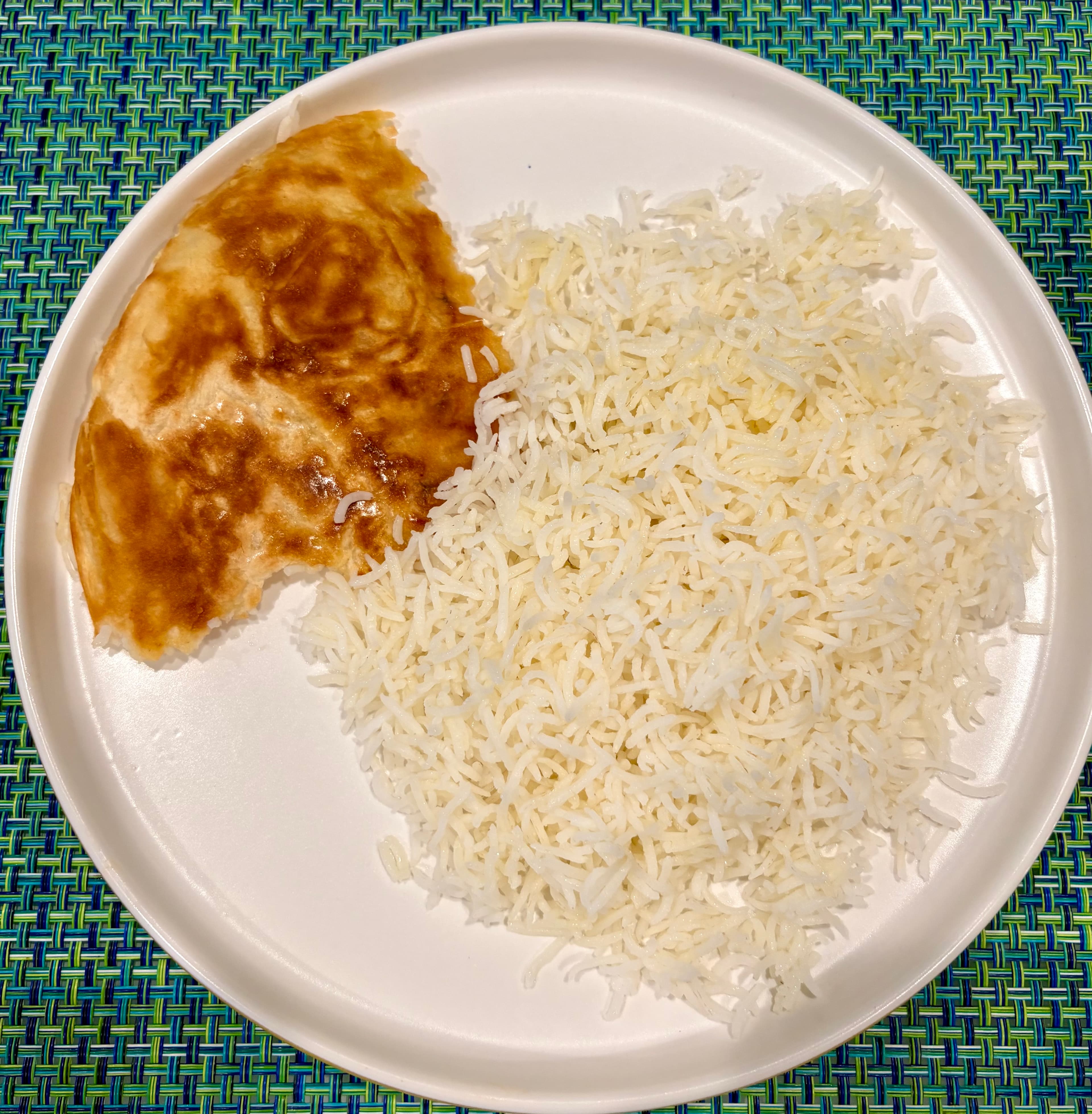
I always buy my rice from a Persian or Mediterranean market — my favorite is Dunar brand long grain basmati, because it's so aromatic and flavorful, and it expands beautifully once fully cooked. If you can't find that brand near you, don't worry — try a few different brands until you find the one you love.
Ingredients
For the Rice
- 2 cups organic long grain basmati rice
- 3 1/4 cups cold water
- 2 tbsp coarse or regular sea salt
- 1 tbsp organic extra virgin olive oil
For the Saffron Rice (optional)
- 1 tsp organic ground Persian saffron
- 3 tbsp boiling water
Instructions
- 1
Place the rice in a bowl and rinse several times, until the water runs clear.
- 2
In a pot over medium heat, combine the 3 1/4 cups cold water, the sea salt, and 1 tablespoon of the olive oil.
- 3
Optional, for saffron rice: while the water comes to a boil, stir the ground saffron into 3 tablespoons of boiling water in a small bowl and let it steep to release its color.
- 4
Once the water is boiling, drain the rinsed rice and add it to the pot. Lower the heat to medium-low and cook, uncovered, until the rice grains turn translucent.
- 5
Drain the rice in a strainer and rinse with cold water.
- 6
Optional: toss a spoonful of the rice with the saffron water until well colored, then set it aside to sprinkle over the top when you assemble your tahdeeg.
Notes
- This is the base method I use for Persian basmati rice. Pair it with one of the tahdeeg (crispy golden bottom) techniques in Preparations & Tips to finish the dish.
- The photo above shows this rice served with lavash tahdeeg — see the Lavash Tahdeeg recipe in Preparations & Tips.
- A good nonstick pot (or a rice cooker), along with good-quality butter and extra virgin olive oil, makes all the difference for Persian rice.
- For the best saffron flavor, grind an entire package of saffron threads to a powder in a mortar and pestle, then store what you don't use in a small airtight container for next time.
Rice and Roasted Persian Noodles (Reshteh Polo)
Basmati rice and roasted Persian noodles, parboiled together and steamed over a crisp lavash tahdeeg.
Photo coming soon
Ingredients
For the Rice and Noodles
- 2 1/2 cups organic long grain basmati rice
- 1 package roasted Persian noodles (Sadaf or another brand; sold at Persian markets)
- 1/4 cup organic extra virgin olive oil
- 2 tbsp coarse salt
- 1/3 stick organic butter
For the Tahdeeg
- 1 sheet lavash bread, cut to fit the inside bottom diameter of the pot
- 2-3 tbsp organic extra virgin olive oil
For the Saffron Rice (optional)
- 1/2 tsp finely ground saffron
- 1/2 cup boiling water
Instructions
- 1
Place the rice in the pot you'll cook in and rinse it several times, until the water runs clear.
- 2
Open the package of roasted noodles and break them into thirds. Add them to the rice and cover everything with water, so the water sits about one inch above the rice and noodles.
- 3
Add 2 tablespoons of the olive oil and the salt to the pot and place over medium heat. Stir occasionally until the water comes to a boil, about 6 minutes — the rice should look translucent and be about halfway cooked.
- 4
Drain the rice and noodles in a colander and rinse with cold water to stop the cooking.
- 5
While the rice and noodles drain, pour the remaining olive oil into the bottom of the pot. Lay the lavash bread over the oil, covering the bottom to fit the diameter of the pot.
- 6
Add the rice and noodles back into the pot.
- 7
Optional, for saffron rice: place 1/2 teaspoon finely ground saffron in a small bowl and add 1/2 cup boiling water. Once the saffron has released its color and flavor, stir in 1 cup of the rice until the grains are fully coated, then spoon the mixture over the top of the rice in the pot.
- 8
Drizzle the 2 to 3 tablespoons of set-aside olive oil around the top.
- 9
Cut the butter into 5 squares. Place one in the center on top of the rice and space the other four between the center and the outer edge.
- 10
Cover and place over medium heat until it steams, then lower the heat to medium-low and let it simmer.
- 11
After about 30 minutes, remove the lid and check that the rice is fluffy and cooked through. Once it is, remove from heat.
- 12
Place a large flat platter over the pot and carefully turn it over to release the rice and its golden tahdeeg.
Notes
- In Farsi this dish is called reshteh polo — reshteh means noodles and polo means rice.
- Rinsing the rice right in the cooking pot saves washing an extra bowl — that's how I do it.
- For more on building a lavash tahdeeg, see the Lavash Tahdeeg recipe in Preparations & Tips.
- I serve this rice with either saffron chicken or beef short ribs.
Loobia Polo (Green Bean and Ground Beef Rice)
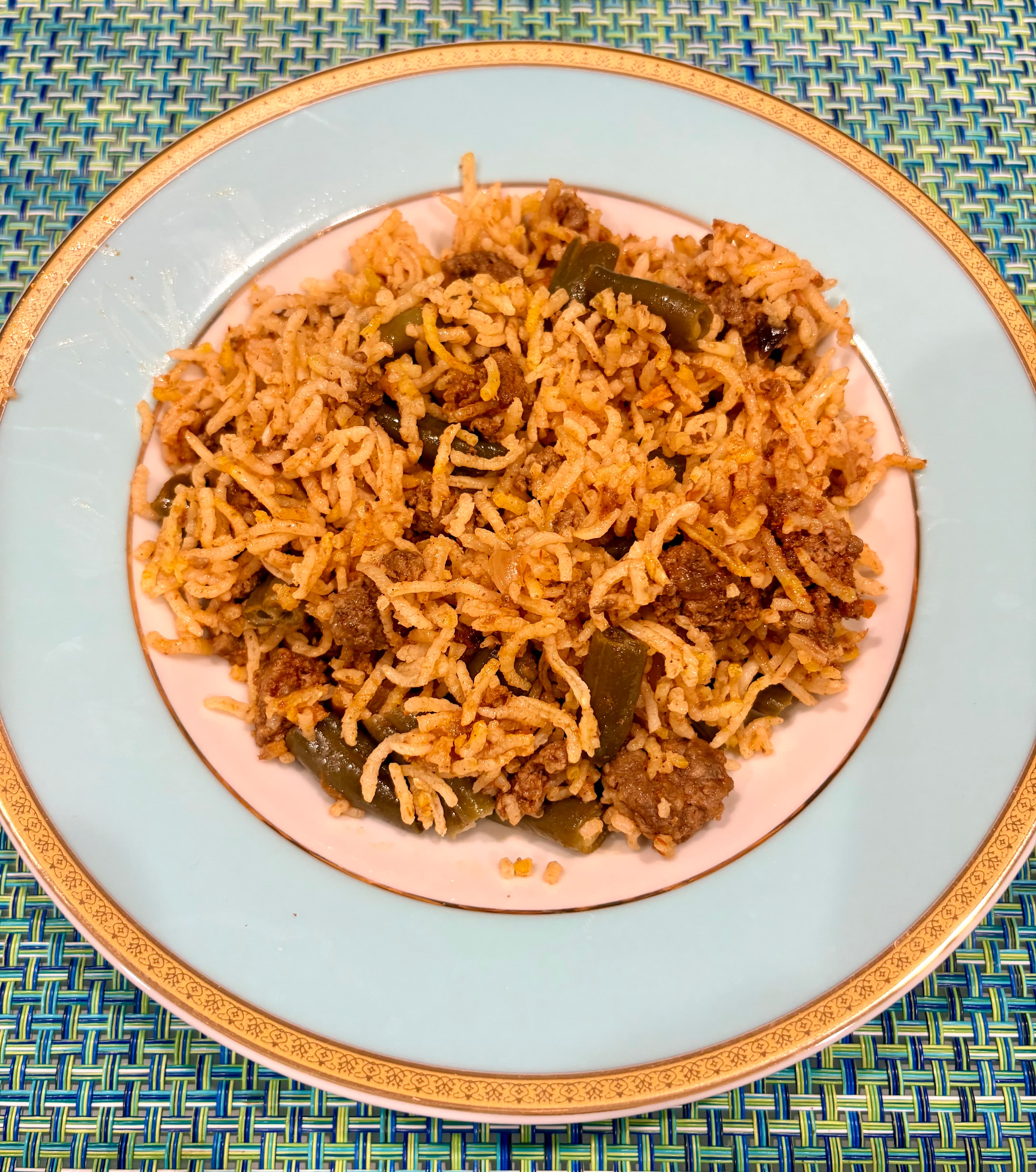
Loobia means green bean and polo means rice in Farsi — ground beef, green beans, and warm spices simmered together, then steamed right into the rice.
Ingredients
For the Meat and Beans
- 1 lb organic grass-fed 80/20 ground beef
- 1 medium organic yellow or white onion, diced
- 2 cups organic cut green beans, fresh, or 1 package organic frozen cut green beans
- 1 small can organic tomato paste
- 1/2 tsp ground saffron
- 1/4 tsp organic ground cinnamon
- 1/4 tsp organic cayenne pepper
- salt and pepper, to taste
- 1/4 cup organic extra virgin olive oil, divided
For the Rice
- 3 cups organic long grain basmati rice
- 4 1/2 cups water
- 1 tbsp coarse salt
- 2 tbsp organic extra virgin olive oil
- 1/4 stick organic butter
Instructions
- 1
Dice the onion and add it to a deep pan with a lid, along with half of the 1/4 cup olive oil (2 tablespoons). Place over medium heat.
- 2
Once the onion has turned golden, add the ground beef and continually break it up until no crumbles of meat remain, mixing it in well with the onion. Cover and reduce the heat to medium-low.
- 3
In a bowl, combine about 6 tablespoons boiling water with the entire can of tomato paste, the saffron, cinnamon, cayenne pepper, salt, and pepper, and mix well until the paste has a smooth, semi-thin consistency.
- 4
Add the tomato paste mixture to the pan and mix thoroughly with the meat and onion. Cover and let the meat cook completely.
- 5
Meanwhile, in a large nonstick pot, rinse the rice several times until the water runs clear. Add the 4 1/2 cups water, 1 tablespoon coarse salt, and 2 tablespoons olive oil (separate from the 1/4 cup above), and place over medium heat until it begins to boil.
- 6
While the rice comes to a boil, add the green beans — fresh or frozen — to the meat.
- 7
Once the rice is about half cooked and the water has mostly evaporated, add the entire meat and green bean mixture to the rice and mix well.
- 8
Drizzle the remaining 2 tablespoons of olive oil over the top. Cut the butter into 5 squares, placing one in the center of the rice and the remaining four spaced between the center and the outer edge.
- 9
Cover and place over medium heat until it begins to steam, then lower the heat to medium-low.
- 10
Let the rice cook undisturbed for at least 60 minutes.
Notes
- In Farsi this dish is called loobia polo — loobia means green bean and polo means rice.
- Adjust the cayenne pepper up or down to reach your own desired level of spiciness.